
Cooling Systems for the Food Industry: Selecting a HACCP-Compliant Chiller
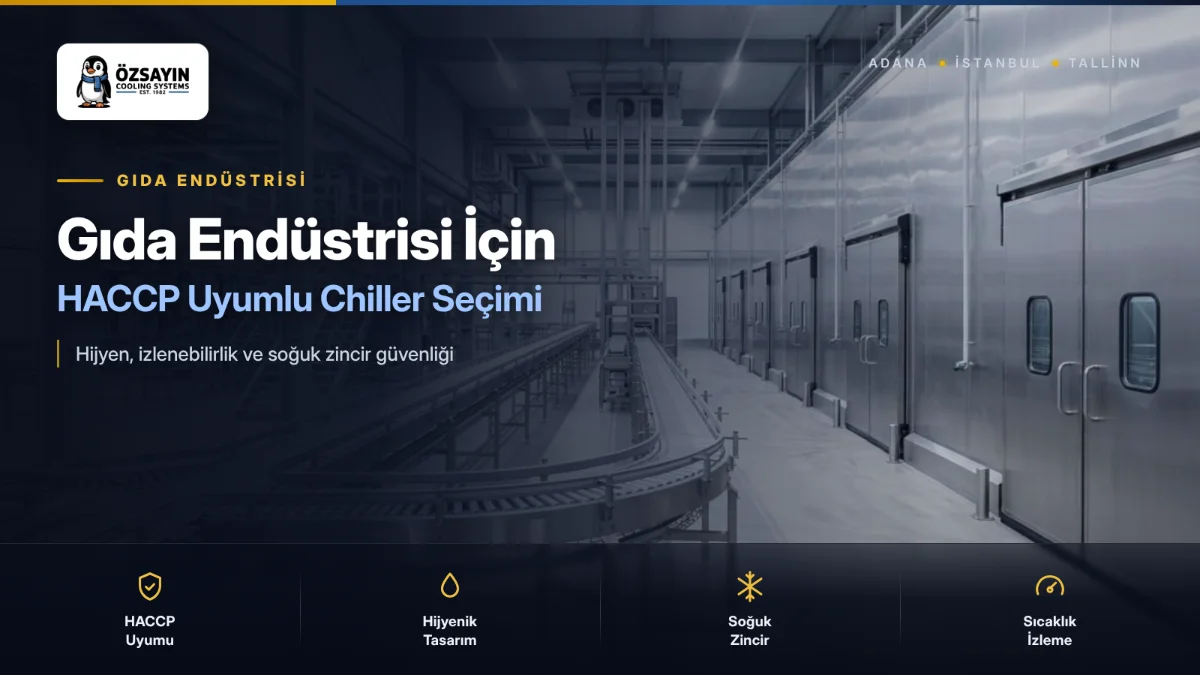
The Importance of Cooling in the Food Sector
In food processing, packaging and storage facilities, temperature control directly determines both product quality and food safety. HACCP (Hazard Analysis and Critical Control Points) systems define the reliability of the cooling infrastructure as a critical control point; chiller selection and maintenance therefore become a legal requirement.
Features of a Food-Compatible Chiller
- Stainless steel casing and pipe connections: Provide corrosion resistance and hygienic cleaning
- Food-compatible refrigerant: Natural refrigerants such as R744 (CO₂) or R290 (propane) are preferred; R717 (ammonia) is widely used in large-scale facilities but requires leak-tightness protocols
- IP65+ rated electrical panel: Resistant to washdown and high-humidity environments
- Stainless steel condenser cage and fan: Compatible with regular disinfection routines
Critical Temperature Applications
Blast freezing tunnels operate between -35°C and -45°C and generally require ammonia or CO₂ systems. Cold storage, on the other hand, serves a wide range from +2°C to -22°C. Beverage cooling lines require 2–8°C outlet water. System design and compressor type must be evaluated separately for each application.
Maintenance and Record-Keeping Requirements
During HACCP audits, maintenance records, alarm logs and temperature monitoring reports for the cooling system are requested. Integration with digital data logging systems makes these processes considerably easier.
Özsayın Soğutma offers special chiller configurations and HACCP-compliant maintenance services for the food sector. Get a quotation for your facility.