
What Is an Industrial Chiller? Selection and Maintenance Guide
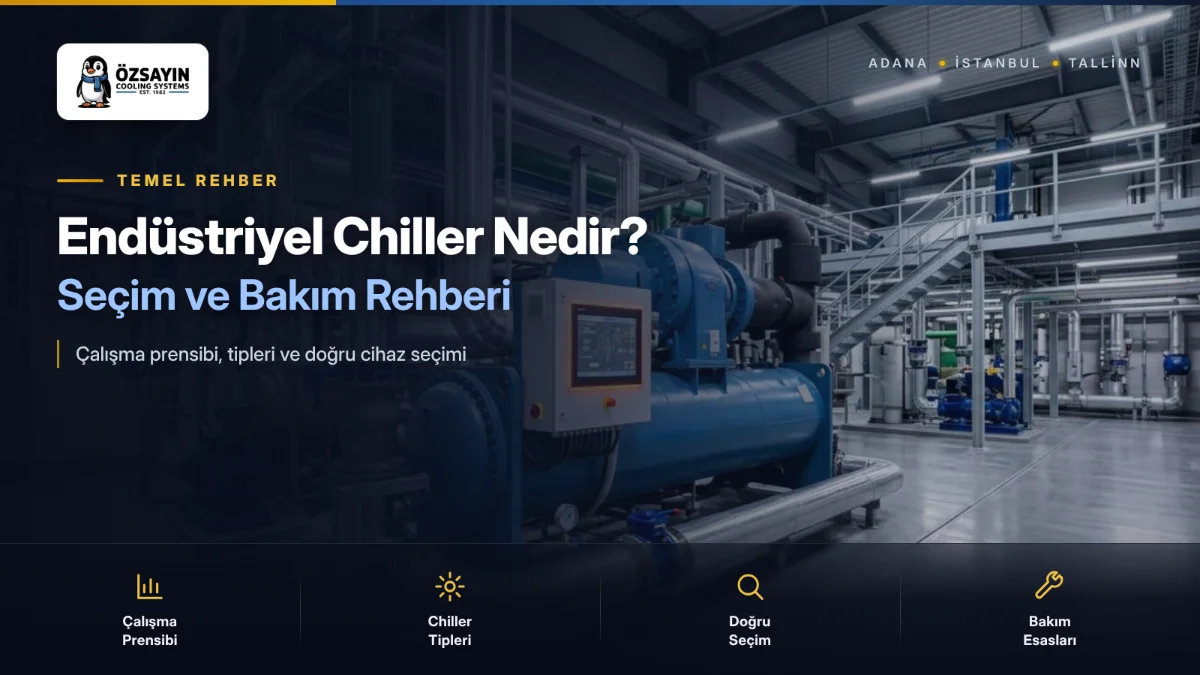
What Is an Industrial Chiller?
An industrial chiller is a mechanical refrigeration unit that cools a liquid (usually water or a glycol mixture) and delivers cooling energy to process equipment, HVAC systems or production lines. Producing chilled water between 5°C and 15°C in a factory environment, these systems keep heat sources under control and directly affect production quality and equipment life.
For capacity calculation, the formula and a worked example, see also our more comprehensive guide What is a chiller, how does it work and how is it selected?
Chiller Types
Air-Cooled Chiller: Uses fans to reject condenser-side heat to the atmosphere. It stands out for easy installation and low operating cost, but efficiency drops at high outdoor temperatures. It is suitable for small and medium-sized facilities.
Water-Cooled Chiller: Rejects heat to water via a cooling tower. It delivers higher energy efficiency (COP) at large capacities (500 kW and above), but requires a cooling tower and an additional pump system.
Scroll, Screw and Reciprocating Compressor Options: Scroll compressors operate quietly and reliably in the 5–200 kW range, while screw compressors are preferred for large capacity needs between 200 and 2,000 kW. Reciprocating (piston) compressors are widely used in industrial processes thanks to their broad refrigerant range and ease of overhaul.
How to Select the Right Chiller
The main parameters to consider when selecting a chiller are as follows:
- Cooling capacity (kW/TR): Determined by the sum of process load + solar gain + lighting heat.
- Inlet/outlet water temperatures: The standard application is 12°C inlet / 7°C outlet; if the process requirement is different, a special configuration is essential.
- Ambient temperature: For air-cooled models, the maximum summer temperature directly affects capacity selection.
- Refrigerant type: R32, R410A, R134a or R513A. Compliance with the F-Gas regulation should be a priority criterion.
- Energy efficiency class (EER/COP): In addition to the investment cost, the 10-year operating cost should also be taken into account.
Key Steps in Chiller Maintenance
Regular maintenance can extend a chiller's life by up to 20 years and reduce energy consumption by 15–20%. Monthly checks include refrigerant pressures, water flow measurement and filter inspection. In the annual maintenance, condenser cleaning, compressor oil analysis, electrical connections and safety valves must be reviewed.
At Özsayın Soğutma, we offer maintenance contracts and 24/7 emergency technical support for all brands and models. Contact our technical team for the chiller solution that suits your system.